Surface Slicing Technology for FDM 3D printing
Concept for future project
Concept for future project
|
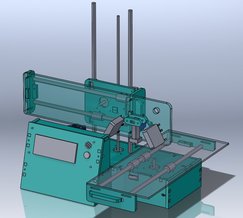
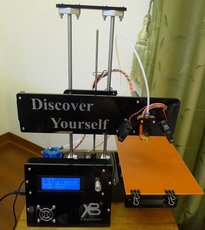
I've been dedicated myself to FDM(fused deposition modeling) 3D printing includes tried several commercial printers(MakerBot, Delta type), build an open-sourced Prusa i3 printer and even design and build my own 3D printers. By experience, I shortlisted some features, pros, and cons of some popular slicing system for 3D printing.
|
|
|
Traditional slicing
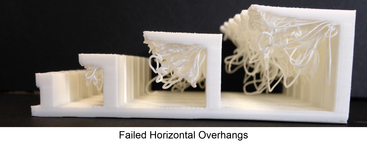
Feature: Slice object into equal height slices. Advantage: Quick to slice Requires less computing resources Easy to setup Disadvantage: Overhangs failure Stair-Stepping Effect 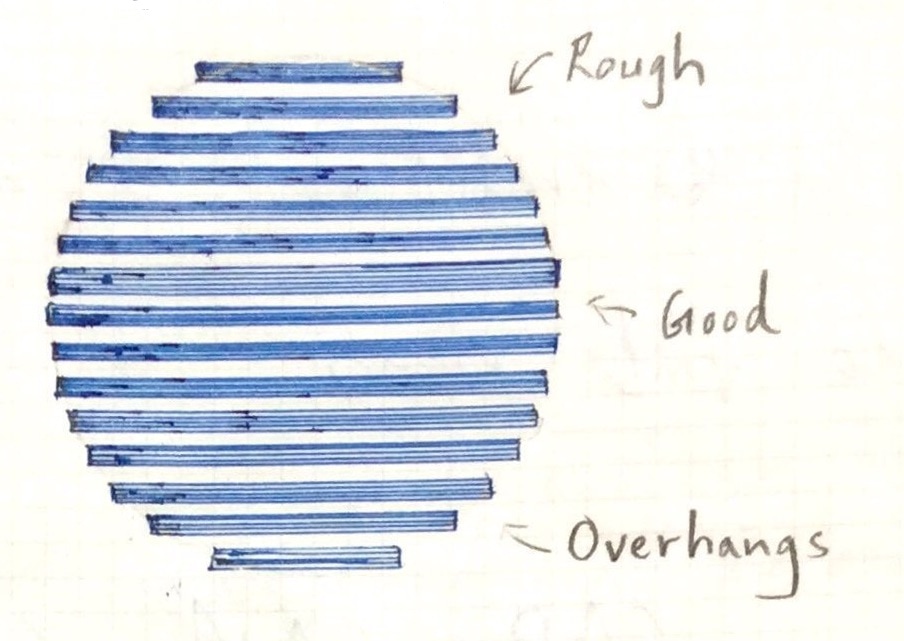
|
Adaptive slicing
Feature: Variable layer within one object Each layer thickness depends on its current slope Advantage: Utilized layer thickness for each layer Decreased stair stepping effect Reduced printing time compared to traditional slicing Disadvantage: Overhangs still exist Multiple object problem 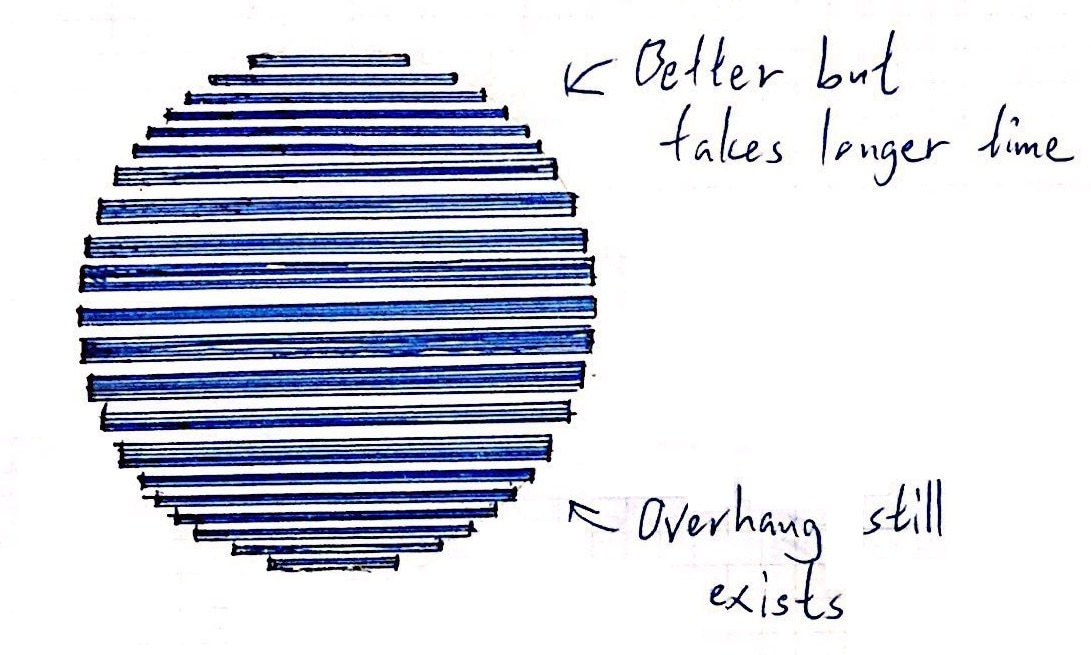
|
|
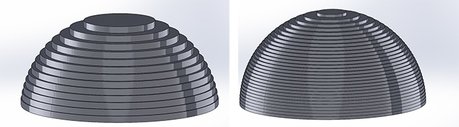
Stair Stepping Effect
|
|
By these disadvantages within current FDM, I would like to do research about this in the future. Therefore I introduce a new slicing concept:
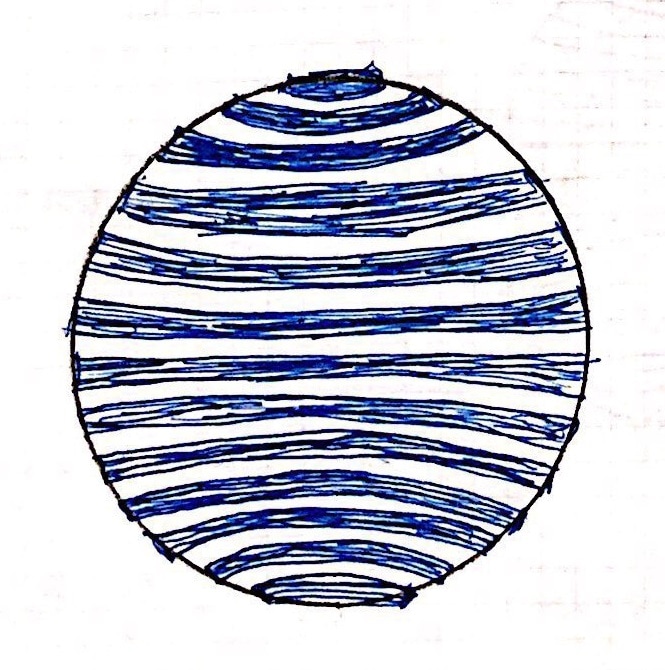
Surface Slicing Technology for FDM 3D Printing It is a new slicing system that utilizes each model with non-planar slicing, in other words, each slice now becomes a surface instead of planar piece. Each surface fits the out shape of the object to minimize overhangs and stair-stepping effect, which will be expected to get a perfect printing without needs of supports . |
|
Better with a 3D-printer of 5 DOF includes the 2D tilt of the printhead.
|
Ideal Model
Ideally the normal vector of the object and sliced surface are nearly perpendicular to each other, which means there will be no stairs and overhangs between layers. In this condition, we must assume that the printhead is only a small disk with zero thickness and the material goes out from one of its sides. Which means, the printhead can go everywhere in the printing area without hitting printed part or other mechanical parts of the printer. |
Real Model
In real, due to the mechanical limitations, we must define the maximum tilt angle of the printhead and also the maximum curvature of the sliced surface to avoid self-collision. Therefore, by existing mechanical limitations, the algorithm will still try to minimize the effect of stair-stepping and overhang. |
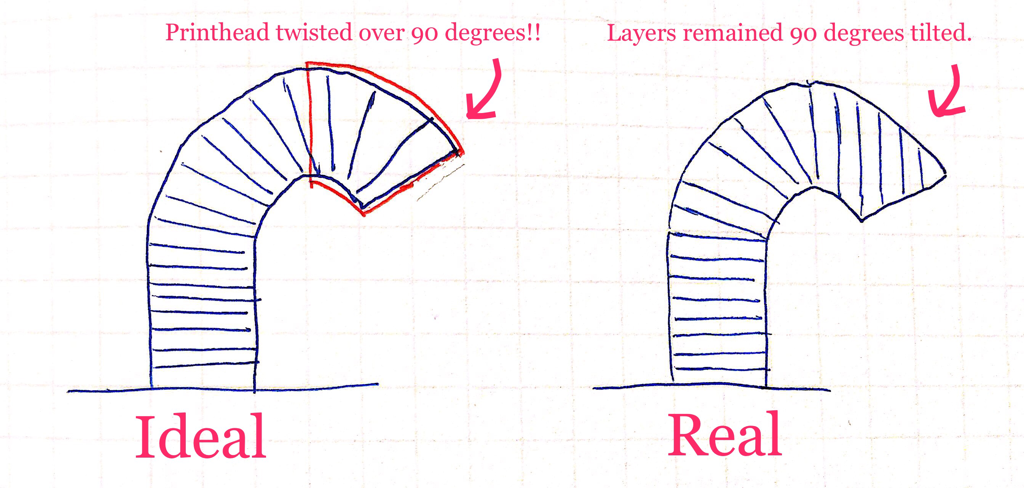
For example, this candy cane shaped object will be printed like this with each sliced layer perpendicular to its shape, but we can see that at the end of the print, the printhead needs to tilt more than 90 degrees which are hardly feasible in real.
In real we can see that initially, the slice layer fits the shape after the angle reached 90 degrees, it remains 90 deg to the end. Although it cannot be as ideal in all condition, this method does make some object printable without support.
In real we can see that initially, the slice layer fits the shape after the angle reached 90 degrees, it remains 90 deg to the end. Although it cannot be as ideal in all condition, this method does make some object printable without support.
Future
Creating artworks like glass which is unable to print supports or results badly with adaptive slicing.
Looks more likely what the material want to be.
Creating artworks like glass which is unable to print supports or results badly with adaptive slicing.
Looks more likely what the material want to be.
Reference
3D PRINTERING: NON-PLANAR LAYER FDM
http://hackaday.com/2016/07/27/3d-printering-non-planar-layer-fdm/
University of Oslo Master's Student Creates Amazing Open Source 5-Axis 3D Printer
https://3dprint.com/77400/5-axis-3d-printer/
Images From:
https://innovationstation.utexas.edu/tip-design/
http://support.3dverkstan.se/article/30-getting-better-prints
3D PRINTERING: NON-PLANAR LAYER FDM
http://hackaday.com/2016/07/27/3d-printering-non-planar-layer-fdm/
University of Oslo Master's Student Creates Amazing Open Source 5-Axis 3D Printer
https://3dprint.com/77400/5-axis-3d-printer/
Images From:
https://innovationstation.utexas.edu/tip-design/
http://support.3dverkstan.se/article/30-getting-better-prints